From an article at Psychology Today > > >

Many preschool and kindergarten teachers have told me that they are extremely upset—some to the point of being ready to resign—by the increased pressure on them to teach academic skills to little children and regularly test them on such skills. They can see firsthand the unhappiness generated, and they suspect that the children would be learning much more useful lessons through playing, exploring, and socializing, as they did in traditional nursery schools and kindergartens. Their suspicions are well validated by research studies.
A number of well-controlled studies have compared the effects of academically oriented early education classrooms with those of play-based classrooms (some of which are reviewed here (link is external), in an article by Nancy Carlsson-Paige, Geralyn McLaughlin,and Joan Almon).[1] The results are quite consistent from study to study: Early academic training somewhat increases children’s immediate scores on the specific tests that the training is aimed at (no surprise), but these initial gains wash out within 1 to 3 years and, at least in some studies, are eventually reversed. Perhaps more tragic than the lack of long-term academic advantage of early academic instruction is evidence that such instruction can produce long-term harm, especially in the realms of social and emotional development.
A Study in Germany that Changed Educational Policy There
For example, in the 1970s, the German government sponsored a large-scale comparison in which the graduates of 50 play-based kindergartens were compared, over time, with the graduates of 50 academic direct-instruction-based kindergartens.[2] Despite the initial academic gains of direct instruction, by grade four the children from the direct-instruction kindergartens performed significantly worse than those from the play-based kindergartens on every measure that was used. In particular, they were less advanced in reading and mathematics and less well-adjusted socially and emotionally. At the time of the study, Germany was gradually making a switch from traditional play-based kindergartens to academic ones. At least partly as a result of the study, Germany reversed that trend; they went back to play-based kindergartens. Apparently, German educational authorities, at least at that time, unlike American authorities today, actually paid attention to educational research and used it to inform educational practice.
A Large-Scale Study of Children from Poverty in the United States
Similar studies in the United States have produced comparable results. One study, directed by Rebecca Marcon, focused on mostly African American children from high-poverty families.[3] As expected, she found—in her sample of 343 students–that those who attended preschools centered on academic training showed initial academic advantages over those who attended play-based preschools; but, by the end of fourth grade, these initial advantages were reversed: The children from the play-based preschools were now performing better, getting significantly higher school grades, than were those from the academic preschools, This study included no assessment of social and emotional development.
An Experiment in Which Children from Poverty Were Followed up to Age 23
In a well-controlled experiment, begun by David Weikart and his colleagues in 1967, sixty eight high-poverty children living in Ypsilanti, Michigan, were assigned to one of three types of nursery schools: Traditional (play-based), High/Scope (which was like the traditional but involved more adult guidance), and Direct Instruction (where the focus was on teaching reading, writing, and math, using worksheets and tests). The assignment was done in a semi-random way, designed to ensure that the three groups were initially matched on all available measures. In addition to the daily preschool experiences, the experiment also included a home visit every two weeks, aimed at instructing parents in how to help their children. These visits focused on the same sorts of methods as did the preschool classrooms. Thus, home visits from the Traditional classrooms focused on the value of play and socialization while those from the Direct-Instruction classrooms focused on academic skills, worksheets, and the like.
The initial results of this experiment were similar to those of other such studies. Those in the direct-instruction group showed early academic gains, which soon vanished. This study, however, also included follow-up research when the participants were 15 years old and again when they were 23 years old. At these ages there were no significant differences among the groups in academic achievement, but large, significant differences in social and emotional characteristics.
By age 15 those in the Direct Instruction group had committed, on average, more than twice as many “acts of misconduct” than had those in the other two groups. At age 23, as young adults, the differences were even more dramatic. Those in the Direct Instruction group had more instances of friction with other people, were more likely to have shown evidence of emotional impairment, were less likely to be married and living with their spouse, and were far more likely to have committed a crime than were those in the other two groups. In fact, by age 23, 39% of those in the Direct Instruction group had felony arrest records compared to an average of 13.5% in the other two groups; and 19% of the Direct Instruction group had been cited for assault with a dangerous weapon compared with 0% in the other two groups.[4]
What might account for such dramatic long-term effects of type of preschool attended? One possibility is that the initial school experience sets the stage for later behavior. Those in classrooms where they learned to plan their own activities, to play with others, and to negotiate differences may have developed lifelong patterns of personal responsibility and pro-social behavior that served them well throughout their childhood and early adulthood. Those in classrooms that emphasized academic performance may have developed lifelong patterns aimed at achievement, and getting ahead, which—especially in the context of poverty—could lead to friction with others and even to crime (as a misguided means of getting ahead).
I suspect that the biweekly home visits played a meaningful role. The parents of those in the classrooms that focused on play, socialization, and student initiative may have developed parenting styles that continued to reinforce those values and skills as the children were growing up, and the parents of those in the academic training group may have developed parenting styles more focused on personal achievement (narrowly defined) and self-centered values—values that did not bode well for real-world success.
—
What has been your experience with early education, as a parent or a teacher? What effects have you seen of early academic training, or, conversely, of experience in traditional play-based preschools and kindergartens? This blog is a forum for discussion, and your views and knowledge are valued and taken seriously, by me and by other readers. Make your thoughts known in the comments section below.
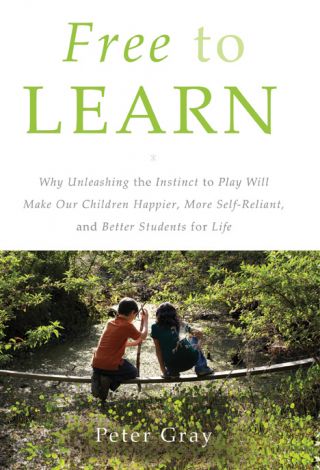
See also: Free to Learn (link is external); and alternativestoschool.com (link is external); and join me on Facebook (link is external).
References
[1] Nancy Carlsson-Paige, Geralyn Bywater McLaughlin, & Joan Wolfsheimer Almon. (2015). Reading Instruction in Kindergarten: Little to Gain and Much to Lose. Published online by the Alliance for Childhood. http://www.allianceforchildhood.org/sites/allianceforchildhood.org/files… (link is external)
[2] Linda Darling-Hammond and J. Snyder. 1992. “Curriculum Studies and the Traditions of Inquiry: The Scientific Tradition.” Edited by Philip W Jackson. Handbook of Research on Curriculum. MacMillan. pp. 41-78.
[3] R. A. Marcon, 2002. “Moving up the grades: Relationship between preschool model and later school success.” Early Childhood Research & Practice 4(1). http://ecrp.uiuc.edu/v4n1/marcon.html (link is external).
[4] Larry J. Schweinhart and D. P. Weikart. 1997. “The High/Scope Pre- school Curriculum Comparison Study through age 23.” Early Childhood Research Quarterly 12. pp. 117-143
Leave a Reply
You must be logged in to post a comment.