 We hear the terms equity and equality being used ad nauseam. Is there really a difference between the two terms and if so what are they? How is “equity” being used as a tool of change and does it make sense or is it more political and a power grab? Today we delve into equity and equality in K-12 education.
Update: As we get ready to go to press here’s an article from New York on gifted children programs being phased out due to…equity concerns…how far will this go? https://pjmedia.com/news-and-politics/rick-moran/2021/10/08/new-york-city-has-run-out-of-gifted-and-talented-students-n1522585
Let’s start off with some definitions:
What does equity in education mean?
- Equity in education is the process of reforming practices, policies, and procedures at the school and district levels to support academic fairness and inclusion and ensure that every child has the resources, teachers, interventions, and supports they need to be successful.
- Educational equity means the educational system gives each student what he or she needs to perform at an acceptable level. According to the Organization for Economic Cooperation and Development (OECD), equity in education has two dimensions that are closely intertwined.
- Educational equity means the educational system gives each student what he or she needs to perform at an acceptable level. According to the Organization for Economic Cooperation and Development (OECD), equity in education has two dimensions that are closely intertwined.
What does equality in education mean?
- Educational equity is the study and achievement of fairness, justice, and impartiality (equality) in education. The term equity means accommodating and meeting the specific needs of specific individuals. This means ensuring that everyone’s learning needs are met.
- The equality of educational opportunities will ensure a rapid advancement of a nation. When the people have opportunities to get education, they will have a chance to develop their natural talent and thus enrich the society.
- Equal opportunity in education means that each state must provide the same opportunities for everyone who attends school regardless of gender, race, color or nationality. It also means that school districts must take action to overcome barriers to students’ equal participation.
How do we define the differences between equity and equality in education?
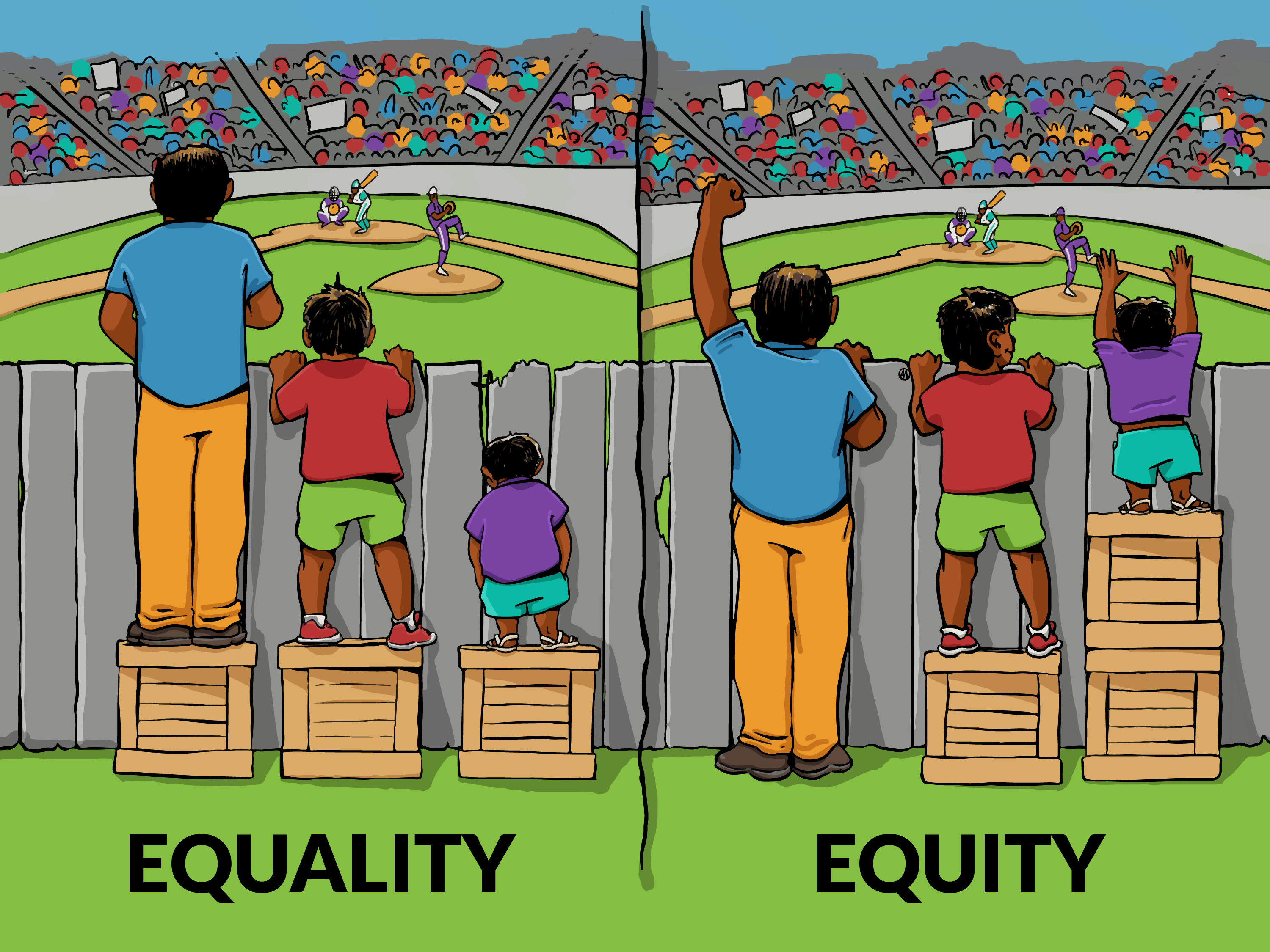
- Essentially, the difference is this: in an “equal” system, all students are given the same resources. In an “equitable” system, resources are given to students based on their individual needs.
- The two terms, equality and equity, have been used interchangeably, but not many people are aware of the distinction between them. Equality in education is the provision of equal treatment, access, and opportunity to resources, regardless of one’s background or necessities. In spite of how equality is important, it frequently fails to fulfill unique needs. For instance, providing each child with a laptop to take home would not help those who do not have access to the Internet at home. Even though an educational institution may promote equality and equal access to resources, some children are still at risk of facing hardships, due to individualized circumstances.On the other hand, equity in education guarantees that students from low-income families, people with disabilities, and other marginalized groups receive educational tools, resources, and assistance that are tailored to their specific needs, rather than providing the same amount for all individuals. For example, equity considers the reality that a child with a specific disability requires different physical assistance at school than a peer who does not. It ensures that everyone has access to the resources they need in order to succeed, regardless of race or socioeconomic status. Equity is more purposeful compared to equality, and while it requires more effort, it is believed to be far more meaningful and effective.
- Educational equity ensures that the needs of individuals from disadvantaged socioeconomic backgrounds, individuals with disabilities, and other disenfranchised minorities are provided with educational tools, resources, and support that are individualized to a student’s educational needs. In juxtaposition, educational equality assumes that all students’ educational needs are the same, and that individualized systems of educational resources are not warranted. Educational equality negates the ability to transition into the next iteration of public education that focuses on education that is equitable.
What does the WA State Superintendent of Schools (Chris Reykdahl) through OSPI (Officer of Superintendent of Public Instruction have to say about “equity”? Here’s a link to a search we did of the OSPI website: Search | OSPI (www.k12.wa.us)
Waterford.org (a national group) says this: Equality is: Generic; Group-focused; Equal. Equity is: Adaptable; Individual-focused; Fair
What does it all boil down to? Most people believe that all students need to have the same opportunity and be treated fairly without bias (= Equality). Others believe that resources, testing and expectations need to be different for various ethnic and economic groups (= Equity). Indeed, the biggest single factor those who focus on “equity” is income. They believe the lower the income the less likely it is for students to achieve and have a level playing field. This has led to some efforts to reduce educational expectations and standards in some groups in an effort to level the playing field. Those pushing “equity” want individual educational plans and resources to be used on certain groups to “balance” the playing field.
Perhaps we should look at justice vs equity? Or, fairness and equity? Or, equal and fair?
Please make sure that equality and equity aren’t used interchangeably. Make sure to come up with a clear definition for each and apply them.
What say you?
Leave a Reply
You must be logged in to post a comment.