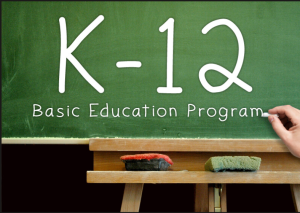
Part 2 of this series can be read at: Washington K–12 Return to Basics and Core Competencies – A Reform Plan For more than two decades, American education has accumulated reform after reform: standards-based education, testing reform, personalized learning, social-emotional learning, project-based learning, competency-based education, technology integration and, most recently, artificial intelligence. Many of these ideas have merit. The problem is that reform has too often been additive. We keep adding new objectives without removing old ones or asking the most basic question: Are students actually learning what they need to know? Washington should begin answering that question with … [Read more...]
When Free Pre-K Is Worse Than No Pre-K

Today’s article from Intellectual Takeout Dale Farran spent a decade studying over 1,000 kids who went to a state-run pre-kindergarten—and a control group of kids that wanted to, but didn’t get in. She is shocked and dismayed by what she discovered: By 6th grade the pre-K kids were doing worse all around: worse reading, math and science scores; more learning disorders; and more discipline problems, including serious ones that got them suspended. “It really has required a lot of soul-searching,” Farran told Anya Kamenetz on NPR. Now she’s pondering “what were plausible reasons that may account for this.” One theory she has is that the free pre-K doesn’t look like pricey … [Read more...]
Creativity decline in school age children

Is the move to using tech impacting creativity in our children? In our efforts to be perfect are we getting so rigid and structured that creativity goes by the wayside? Kyung Hee Kim, a professor of creativity and innovation at the College of William & Mary, has conducted extensive research indicating a significant decline in creativity among school-aged children in the United States since the early 1990s. Her analysis of over 300,000 creativity test scores—primarily from the Torrance Tests of Creative Thinking (TTCT)—reveals that children have become less emotionally expressive, less imaginative, less humorous, and less capable of elaborating on ideas. The most pronounced drops … [Read more...]
We Gave Students Laptops and Took Away Their Brains

From The Free Press. Decades of data show a clear pattern: The more schools digitize, the worse students perform. By Jared Cooney Horvath When people think about excessive technology in schools, their minds usually go to phones. But according to a new book from neuroscientist Jared Cooney Horvath, we’re overlooking the true culprits: the laptops sitting on students’ desks. In “The Digital Delusion: How Classroom Technology Harms Our Kids’ Learning—and How to Help Them Thrive Again,” Horvath explains why consuming information through screens leads to falling performance, fractured attention, and the slow erosion of rigorous thought. We’re proud to publish an exclusive, adapted … [Read more...]
The U.S. spent $30 billion to ditch textbooks for laptops and tablets: The result is the first generation less cognitively capable than their parents

From an article at FORTUNE In 2002, Maine became the first state to implement a statewide laptop program to some grade levels. Then-governor Angus King saw the program as a way to put the internet at the fingertips of more children, who would be able to immerse themselves in information. By that fall, the Maine Learning Technology Initiative had distributed 17,000 Apple laptops to seventh graders across 243 middle schools. By 2016, those numbers had multiplied to 66,000 laptops and tablets distributed to Maine students. King’s initial efforts have been mirrored across the country. In 2024, the U.S. spent more than $30 billion putting laptops and tablets in schools. But more than … [Read more...]
Stop the Struggle: How Parents Can Make Homework Time Smoother

Todays article comes to us from 0ne of our regular readers...Emily Graham at www.mightymoms.net Evenings shouldn’t feel like a battleground. But for many parents, homework time—especially when it involves tricky subjects like language learning—brings tension, frustration, and exhaustion for everyone involved. The goal isn’t to become a substitute teacher or suddenly fluent in Spanish. It’s to create an atmosphere where your child can move forward with clarity, confidence, and calm. That starts with adjusting the environment, your involvement, and your expectations. Here’s how to do it—step by step. Keep it Predictable, Not Perfect Children focus better when they know what’s coming. … [Read more...]
Vancouver SD District 2 Sandra Zavala-Ortega
A list of 12 questions was sent to each candidate with the offer to publish their responses unedited. Ms. Sandra Zavala-Ortega chose not to participate. [She is running unopposed and may assume her record speaks for itself?] Just in case you want to contact her and ask some questions her contact info is in the voters pamphlet reproduced below. If you learn anything please share with us. Editorial comment: This candidate provides literally NO information. She didn’t even provide the basic info. Do you vote for someone because their name is listed? Is this disrespectful and arrogant? Does this person deserve to be elected? ______________________________________________________________ Q1: … [Read more...]
Don’t Kill the Wonder: A Parent’s Guide to Lifelong Learning

Today's article comes to us from our guest writer Emily Graham Some kids light up at the sight of a book or a science kit. Others need a nudge, a spark, a reason to care. But at the root of it all — before school rules or report cards — every child starts with wonder. They want to know how things work, why people act the way they do, what’s behind the next closed door. Your role isn’t to force the learning; it’s to protect the spark. Here’s how to keep that love of learning alive, even when the world tries to quiet it. Let Curiosity Lead Children don’t need coaxing to be curious. They’re born reaching, poking, asking, and turning things upside down to see what spills out. The … [Read more...]
Sweden School Tablets vs Books

Sweden has been reconsidering the role of digital tools, such as tablets, in its education system, particularly in response to concerns about declining reading comprehension skills among students. The country has historically been a leader in digital education, with tablets being a common sight in classrooms for over a decade. However, recent policy shifts have emphasized a return to traditional learning methods, such as the use of physical books and handwriting, especially for younger students. In 2022, Sweden’s Minister of Education, Lotta Edholm, expressed alarm over the decline in Swedish children’s reading comprehension skills, as highlighted by the Progress in International Reading … [Read more...]
Washington’s paramount duty to public education: Part 2
In Part 2 of a two-part series, Dick Rylander and Larry Roe address the question: What is Washington state’s paramount duty under the law and state constitution? Dick Rylander & Larry Roe for Clark County Today Original article can be found at: Opinion: Washington’s paramount duty to public education - ClarkCountyToday.com Basic education has been defined by the state many times over the years. In 2009, several bills, including HB 2261 and HB 2776, were passed by the Legislature. These bills define the basics of basic education. They apply only to Kindergarten through 12th grade (K-12) and even though early learning and higher education are important, they are not included in … [Read more...]
- 1
- 2
- 3
- …
- 7
- Next Page »